
Deeper Dives
Written by Dr Anthony Carew


 Share on
Facebook
Share on
Facebook Share on X
 Share on
LinkedIn
Share on
LinkedIn Share on
WhatsApp
Share on
WhatsApp Copy
link
Copy
link

Deeper Dives
These are longer articles I wrote for various magazines/journals that you can view now and/or download for later perusal.
British Trade Unions in International Affairs
As the second largest national trade union centre in the non-Communist world, the Trades Union Congress (TUC) was a major force in international labour circles in the years after the War. More than any other central organization, the TUC played a leading role in the evolution of the international labour movement. It was pivotal in the short-lived attempt in these years to unify the world movement within the World Federation of Trade Unions (WFTU) formed in Paris in October 1945.

Origins of CIA Financing of AFL-CIO Operations Abroad
Was the American labor movement used by the CIA in the early years of the Cold War, and if so to what extent? Did CIA money finance some ostensibly independent Labor projects? Until recently there was little to add to Tom Braden’s 1967 revelations about his work as Director of the Agency’s International Organizations Division.
The Schism Within the World Federation of Trade Unions: Government and Trade Union Diplomacy
The creation of the World Federation of Trade Unions in October 1945 was intended as a major step towards international trade-union unity. Less than four years later, in January 1949, the secession of its British, American and Dutch affiliates, soon to be followed by the bulk of Western trade union centres, left the international labour movement more divided than ever. Narrative accounts of the WFTU's brief life as a united body and of the developments leading to the schism have long been available and are not matters of contention.¹ As to the cause of the split, however, there is less agreement.
Conflict Within the ICFTU: Anti-Communism and Anti-Colonialism in the 1950s
Formed as an anti-communist labour international, the International Confederation of Free Trade Unions (ICFTU) nevertheless experienced internal conflict over the appropriate approach to communism. The different perspectives of the two largest affiliates, the British TUC and the American AFL- CIO, caused disharmony and ultimately near organizational paralysis until it forced a change of leadership. Caught between these rival positions, the ICFTU secretariat's relations with the AFL-CIO were initially the most strained, but as the International extended its activity in Africa, in a bid to outflank communist organization among labour, relations with the TUC also deteriorated over the correct stance on nationalism and colonialism.

ICFTU Failed Experiment with an Organising Supremo, 1955-61
The World Federation of Trade Unions (WFTU), the global union organization formed in 1945 in an ambitious attempt to continue in peacetime the alliance that had developed in World War II between the labour movements of Britain, the USA, and the Soviet Union, split apart in 1949 under the pressure of big power politics.
The Marshall Plan and Productivity: The AACP's Role
In the context of Britain's early post-war economic crisis, with food and commodity shortages and a persistent foreign exchange problem, national attention focused on the question of increasing industrial production. By 1948, with the introduction of Marshall Aid from the United States, that general quest for greater physical output had been overtaken by a more specific focus on increasing productivity, with low labour productivity coming to be identified as Britain's essential problem.
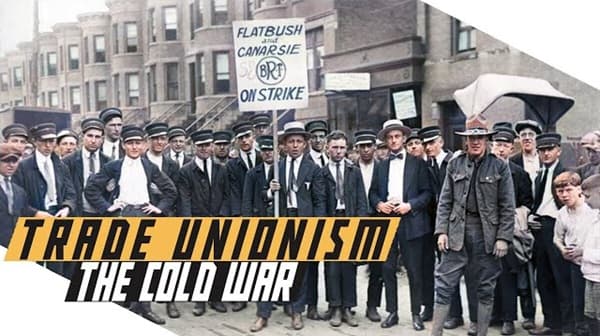
The Politics of Productivity and the Politics of Anti-Communism: American and European Labour and the Cold War
Endless efforts have been made to increase productivity without coming to grips with this problem [i.e. the role of organized labour]. Foremen have watched workers. Engineers have measured workers. Personnel technicians have cajoled workers. Industrial psychologists have tested workers. And the latest group, the psychiatric sociologists have brought psychoanalytic techniques to the workbench and, where others have failed, they now offer to mesmerize workers.
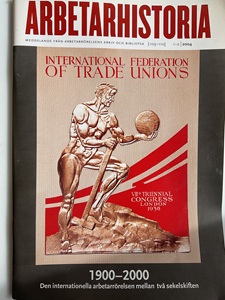
Free Trade Unionism in the International Context
"Free trade unionism" is one of the great rhetorical expressions of the labour movement. The rights of "free" trade unions are what are denied today in countless national situations in an international trading context that contrives to pit workers against one another in the proverbial race to the bottom. In these situations, free trade unionism is a hurrah term: we in the labour movement are all free trade unionists now.
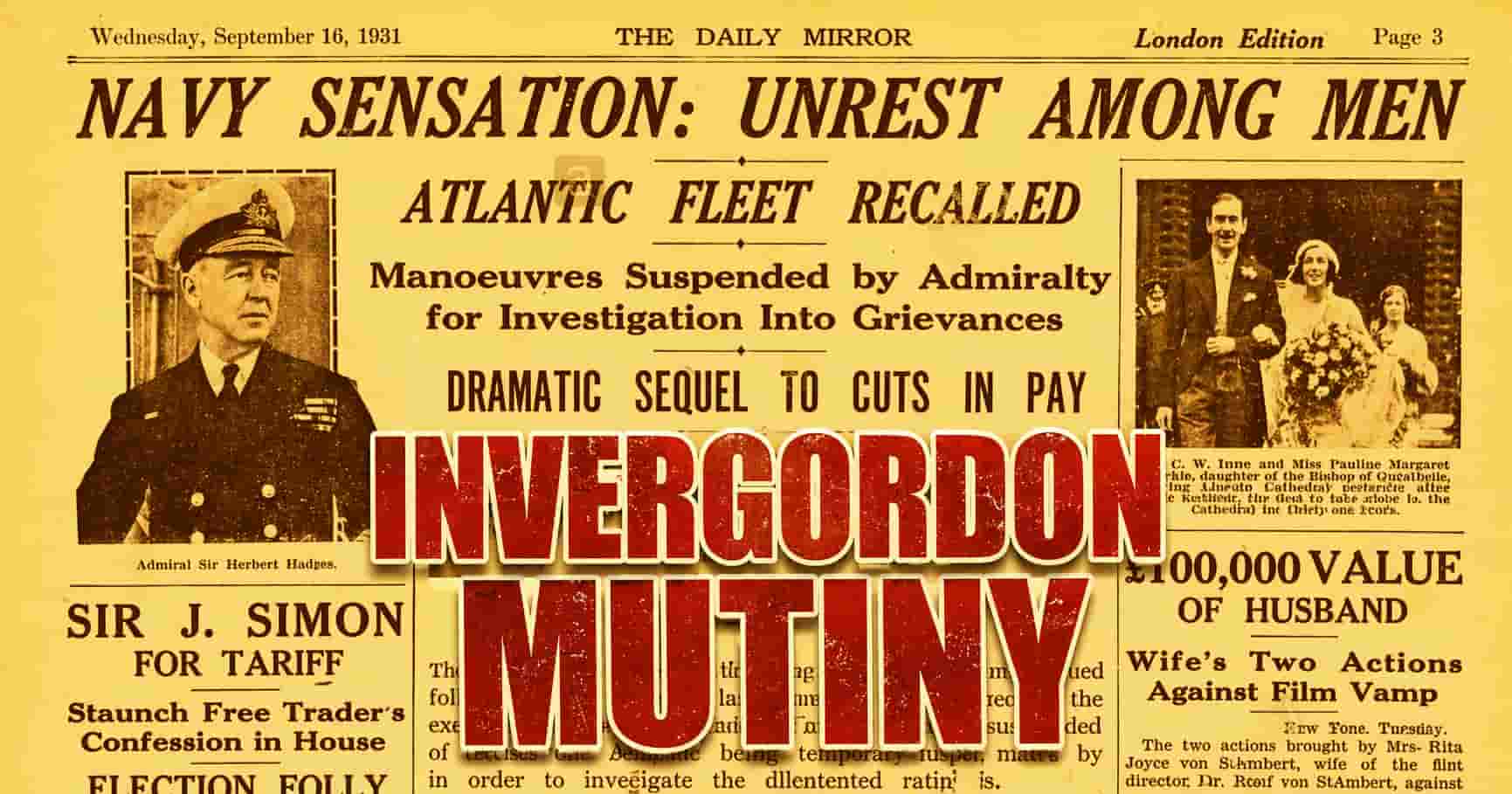
The Invergordon Mutiny, 1931: Long Term Causes, Organisation and Leadership
On Tuesday September 15th, 1931, at 8.00 a.m. most of the stokers of the forenoon watch in the battleship HMS Valiant, under orders to sail from Invergordon for exercises in the North Sea, refused duty and prevented the ship from sailing. In the battleships Rodney and Nelson and the battlecruiser Hood, all due to follow Valiant out to sea, the crews also refused to turn to. By 9.31 a.m. the admiral commanding the Atlantic Fleet had cancelled the exercises and recalled to Cromarty Firth those ships already at sea. What was to become known as the Invergordon Mutiny had begun.